The history of Ninh Binh
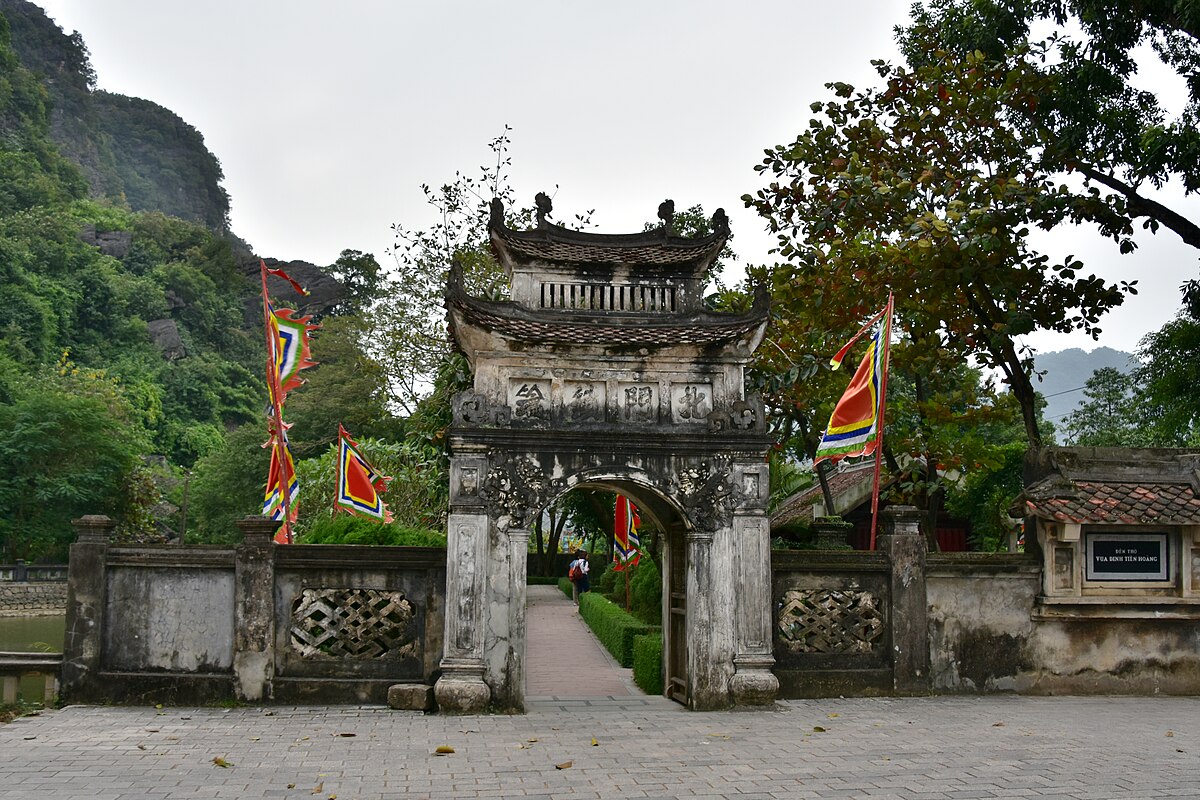
Long before it was a travel destination, the land around Ninh Binh was the cradle of independent Vietnam. In the 10th century, the valley of Hoa Lu became the country's first national capital, ringed by limestone mountains that served as natural fortress walls.
Vietnam's first capital
In 968 AD, the warlord Dinh Bo Linh united the country after a period of civil war, declared himself emperor (Dinh Tien Hoang), named the new state Dai Co Viet, and established his capital at Hoa Lu. The surrounding karst peaks made the site easy to defend, a stronghold as much as a royal city.
Three dynasties, one valley
Hoa Lu remained the political, economic and cultural heart of the young nation for around four decades, spanning the early years of three dynasties:
| Period | Dynasty / event |
|---|---|
| 968-980 | Dinh dynasty, founded by Dinh Tien Hoang |
| 980-1009 | Early Le dynasty, founded by Le Dai Hanh |
| 1009-1010 | Start of the Ly dynasty |
| 1010 | Ly Thai To moves the capital to Thang Long (modern Hanoi) |
When the capital shifted north to Thang Long in 1010, Hoa Lu became the "ancient capital", and the mountains kept its temples and stories safe for the next thousand years.
What remains today
At the Hoa Lu historical site you can still walk among temples dedicated to the Dinh and Le kings, set against the cliffs that once protected them. Nearby, the Thai Vi Temple honours the later Tran dynasty. The whole area sits inside what is now the UNESCO-listed Trang An landscape, where archaeologists have found traces of human life going back more than 30,000 years.
Why it matters: Ninh Binh is not just scenery. It is where Vietnam first became a unified, independent country, which is why the region is treated as a national heritage centre. See the facts and figures for the bigger picture.